
The SUN4Ukraine Partnership Programme is built on a simple but powerful idea: cities learn best from other cities. By pairing Ukrainian Flagship Municipalities with EU Mission Cities, the programme creates opportunities for practical exchange on climate neutrality, sustainable urban development, and resilient reconstruction.
Each partnership is carefully matched based on cities' characteristics, priorities and expertise. Through online peer-learning sessions, study visits and mentoring from experienced Mission Cities, Ukrainian municipalities gain first-hand insight into proven approaches while also sharing their own experience of managing urban resilience under extraordinary circumstances.
These exchanges are designed to go beyond knowledge sharing. Their ultimate goal is to help both EU Mission Cities and Ukrainian Flagship Municipalities adapt tested solutions to their local context and move towards concrete implementation.
In June and July 2026, two SUN4Ukraine study visits took place, each reflecting the specific priorities of the partner cities involved. While Zviahel's exchange with Utrecht focused on sustainable mobility and urban development, Konotop's visit to Lappeenranta placed particular emphasis on security and critical infrastructure resilience.
Zviahel visits Utrecht to explore sustainable urban solutions
From 7 to 11 June 2026, representatives of the Ukrainian city of Zviahel visited Utrecht, the Netherlands, as part of the SUN4Ukraine Partnership Programme. The delegation included Zviahel Deputy Mayor Iryna Hudz and City Councillor Valentyna Trosteniuk, accompanied by representatives of Eurocities and project staff. The visit coincided with the Eurocities Annual Conference 2026 “Sharing Horizons, Connecting People”, providing an additional opportunity to engage with city leaders and sustainability experts from across Europe.
The programme combined strategic discussions with practical site visits, allowing the Zviahel delegation to explore how Utrecht is translating its climate ambitions into everyday urban management.
Learning through practice
The visit began with a welcome meeting at Utrecht City Hall, followed by a guided tour of the city centre focusing on Utrecht's transport system. Participants explored how investments in sustainable mobility, public space and cycling infrastructure have helped create a more liveable and accessible city.
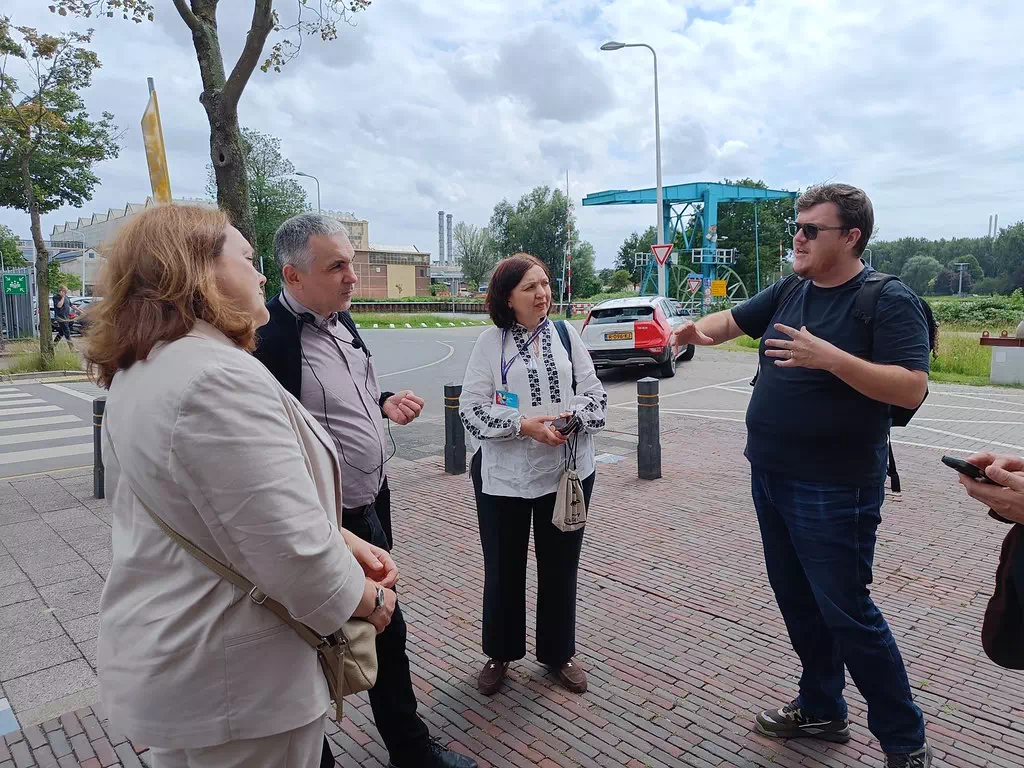
Guided tour of Utrecht’s transport system
A working lunch with Utrecht's Deputy Mayor provided an opportunity to discuss the role of local leadership in delivering climate-neutral urban development and strengthening cooperation between European and Ukrainian municipalities.
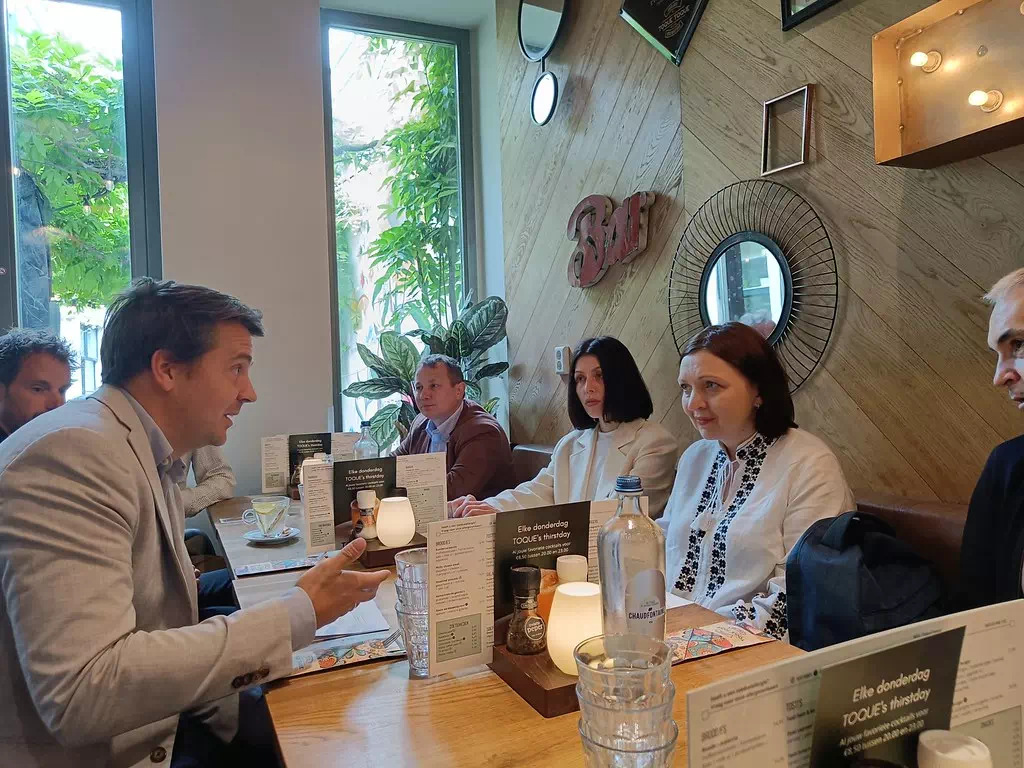
Lunch gathering with the delegations of Zviahel and representatives from Utrecht. Pictured are, among others, Zviahel's Deputy Mayor, Iryna Hudz, and Mariupol's Deputy Mayor, Olha Pikula.
The delegation also visited Utrecht's municipal waste management facilities, where they learned about the city's approach to household waste collection, operational management and resource efficiency. These practical exchanges offered valuable insights into municipal services that directly contribute to environmental sustainability and quality of life.
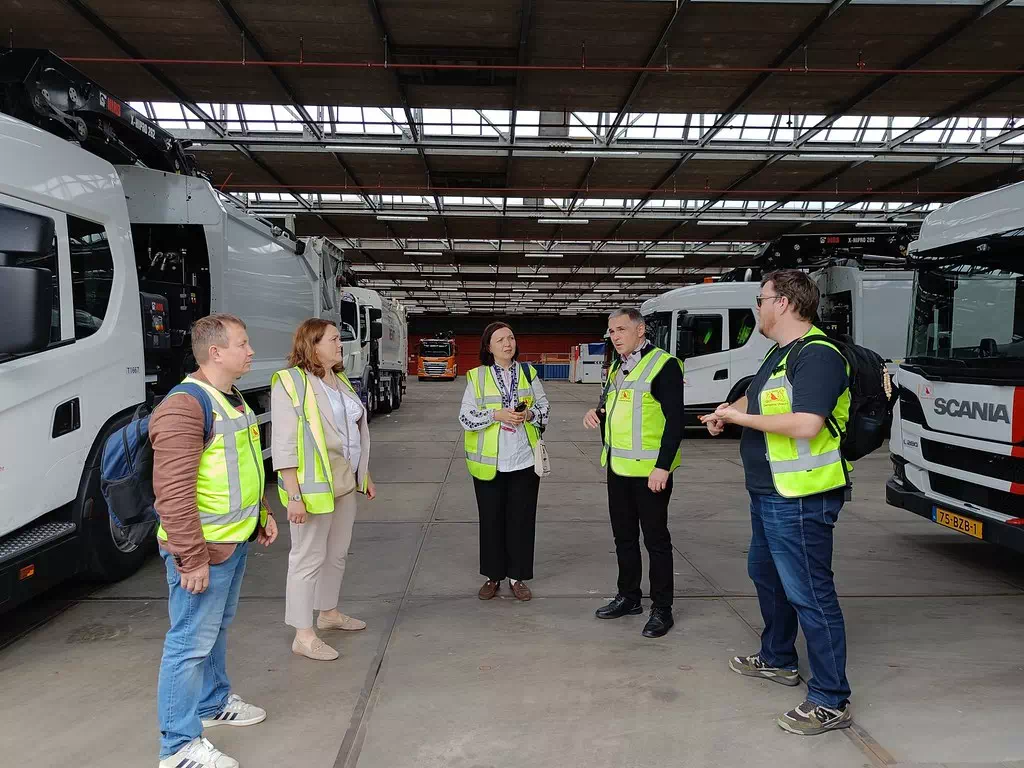
Zviahel’s delegation on their tour of Utrecht’s waste management facilities
Another important part of the visit was a dedicated tour of Utrecht's urban development projects, showcasing initiatives focused on expanding green areas, creating inclusive public spaces, improving energy efficiency and implementing measures to address climate change. These examples demonstrated how environmental objectives can be integrated into broader urban planning while enhancing social interaction and residents' wellbeing.
Connecting with the wider European city network
Eurocities Annual Conference 2026
Participation in the Eurocities Annual Conference 2026 allowed the Zviahel delegation to broaden the scope of the exchange beyond the bilateral partnership.
Conference sessions addressed topics including climate action, urban resilience, democratic governance and the role of cities in responding to Europe's shared challenges. The delegation joined discussions on how local governments are advancing climate neutrality while supporting economic competitiveness, engaging citizens and building stronger communities.
Networking events and meetings with representatives of European cities created opportunities to establish new contacts, exchange experiences and identify potential areas for future cooperation.
By combining practical visits with participation in Europe's largest network of major cities, the study visit offered both technical learning and strategic perspectives on climate neutrality and sustainable urban development.
Konotop visits Lappeenranta to explore security, water and waste management
On the 1st and 2nd July 2026, representatives of the Ukrainian city of Konotop visited Lappeenranta, Finland, as part of the SUN4Ukraine Partnership Programme. The delegation included Mayor Artem Semenikhin, accompanied by technical specialists and project staff. The visit built on the notable similarities between the two cities (comparable size, proximity to the Russian border, and the presence of small airfields in both municipalities) making the exchange especially relevant to Konotop's current challenges.
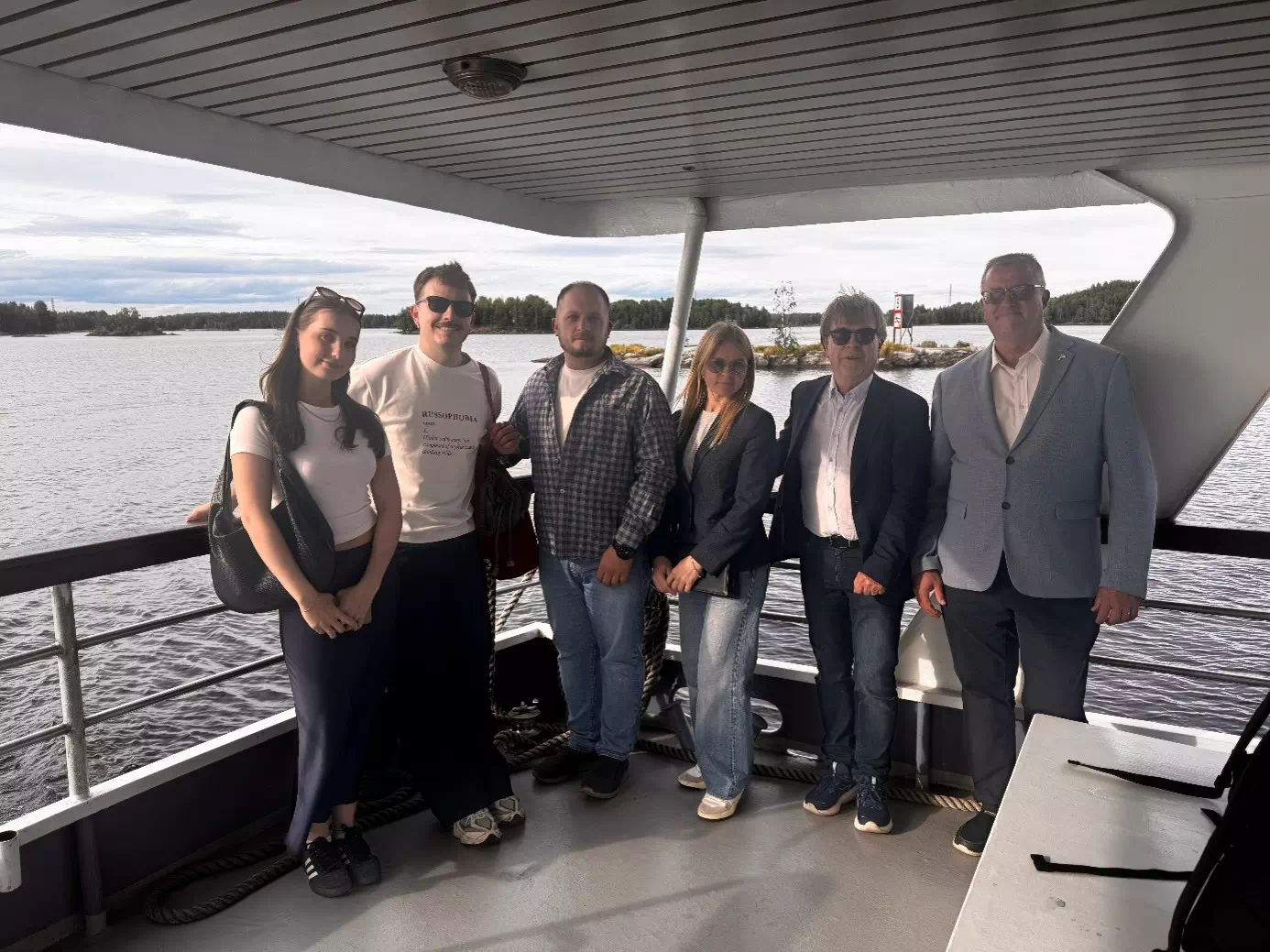
Left to right: Kaisla Anttonen, Pavlo Bilyk, Artem Semenikhin, Svitlana Samsonenko, Ilkka Räsänen, Janne Mäkitalo
Security under a frontline lens
The study visit opened with a session on security and civil readiness, led by Lappeenranta's security and preparedness advisor Janne Mäkitalo. Mayor Semenikhin contributed his own perspective as both a municipal leader and a former serviceman, offering first-hand insight into the realities of governing a city under constant attack. The discussion proved so valuable that both sides agreed on a reciprocal study visit, with Janne Mäkitalo set to travel to Konotop to gain direct exposure to the security challenges the city faces.
Learning through practice: water and waste
A central part of the visit focused on water management. At the Toikansuo wastewater treatment plant, guided by Tuomas Eskelinen, the Konotop delegation engaged in detailed technical discussions covering treatment technologies, construction and operational costs, and long-term financial sustainability. Given the critical importance of the facility to Konotop's functioning, specialists also raised the pressing question of protecting water infrastructure against aerial attacks, particularly drones, and explored measures to strengthen its resilience.
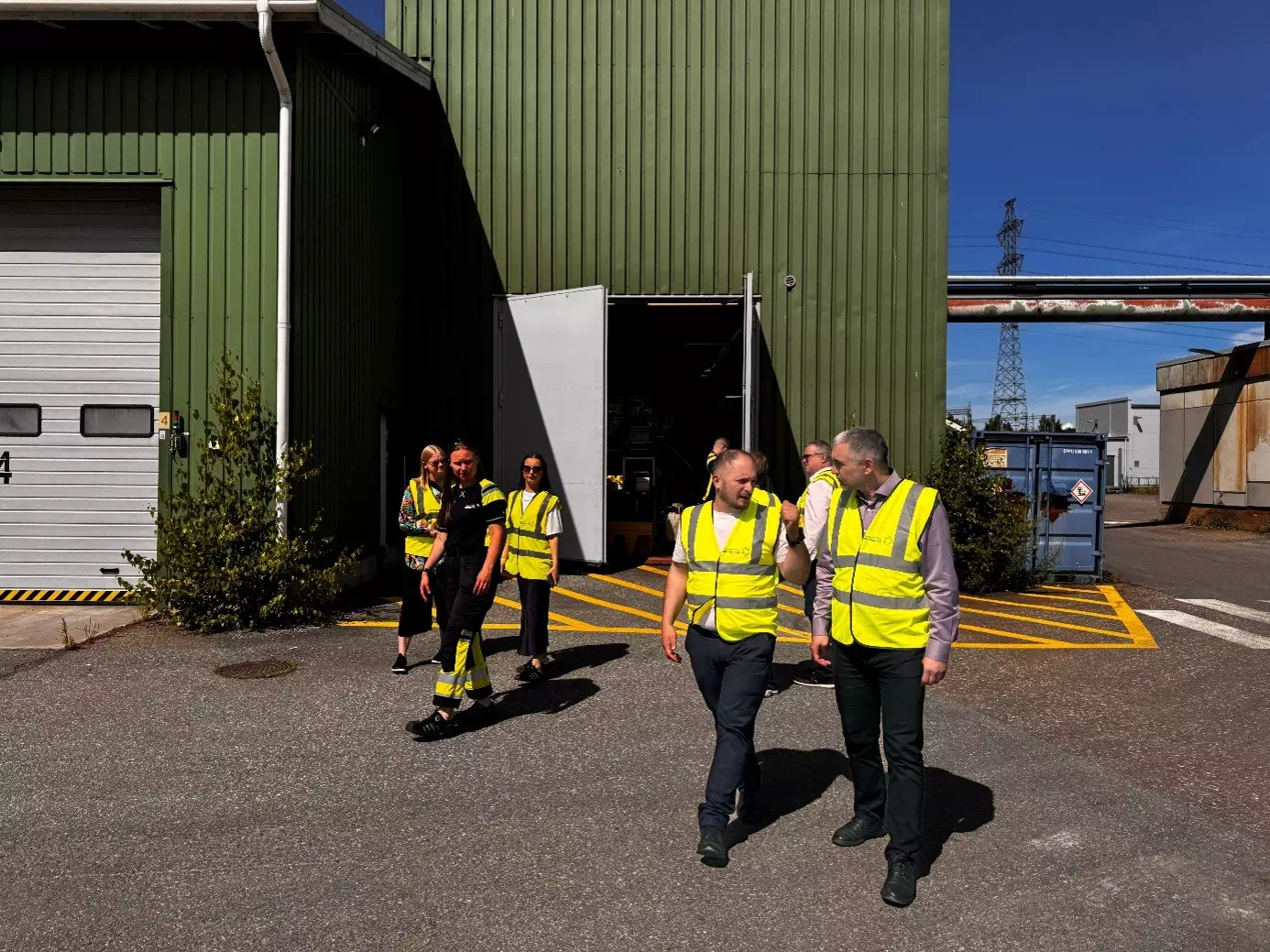
Toikansuo wastewater treatment plant
The second day turned to waste management, with a visit to the Kukkuroinmäki facility. As Konotop is currently developing its own waste management plant in partnership with local stakeholders, the visit offered a timely opportunity to compare approaches to legislation, waste collection systems, and economic feasibility. The Konotop delegation presented their project to representatives of Kukkuroinmäki and the Municipality of Lappeenranta, who agreed to review the proposal and provide expert feedback.
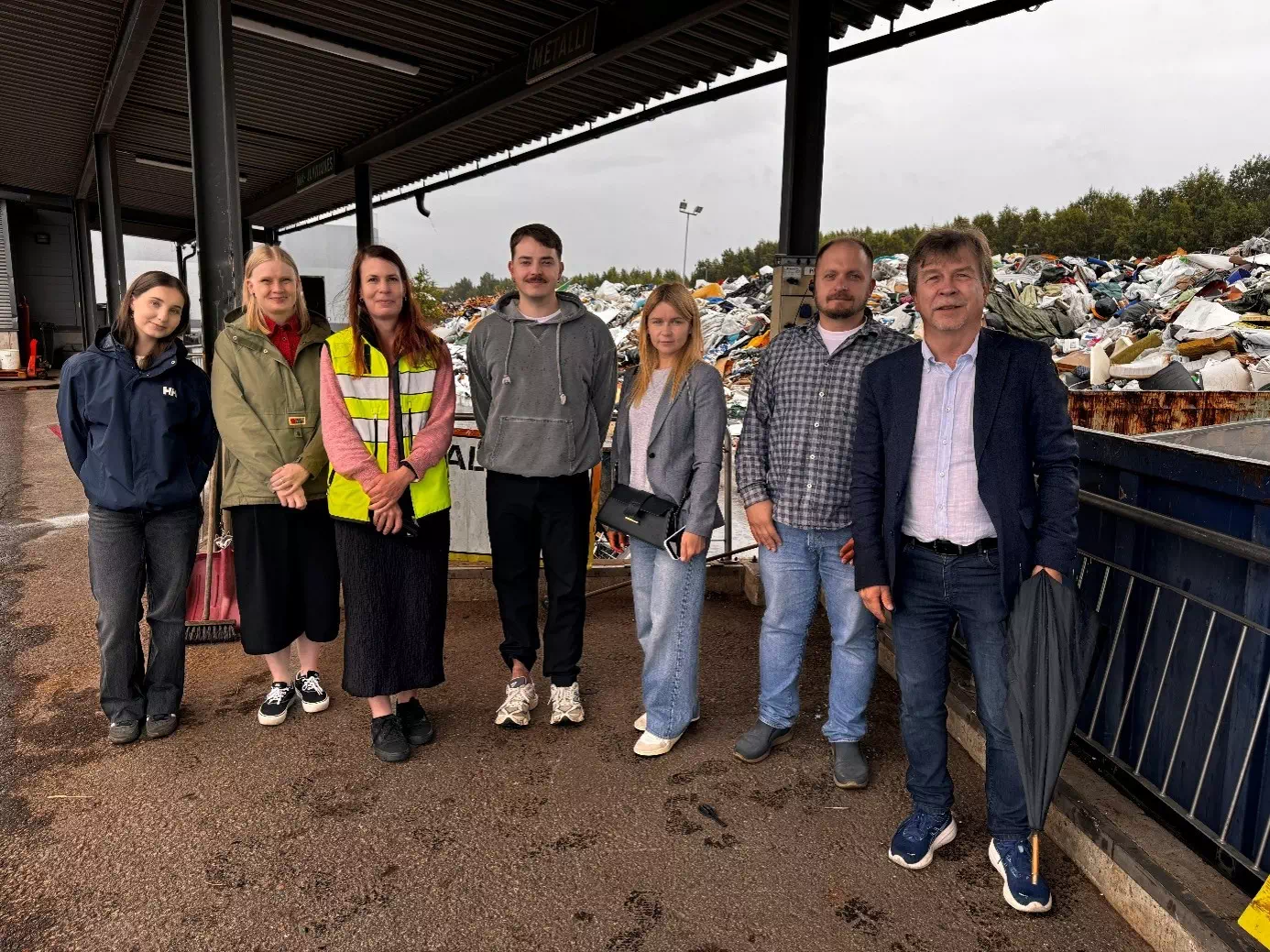
Kukkuroinmäki facility. Kukkuroinmäki Processing Center
Left to right: Kaisla Anttonen, Maria Jokela, Mari Ilvonen, Pavlo Bilyk, Svitlana Samsonenko, Artem Semenikhin, Ilkka Räsänen
Connecting with the local Ukrainian community
Beyond the technical programme, the visit also created space for community connection. The delegation joined the weekly gathering of Ukrainians living in Lappeenranta, held every Thursday at City Hall Square in a show of support for Ukraine, and spoke directly with participants. The Municipality of Lappeenranta also presented the delegation with a board game about the circular economy, specially translated into Ukrainian and adapted for the local Ukrainian community.
By combining technical exchange on infrastructure resilience with human connection, the visit strengthened cooperation between two municipalities that share the same ambition despite different contexts.
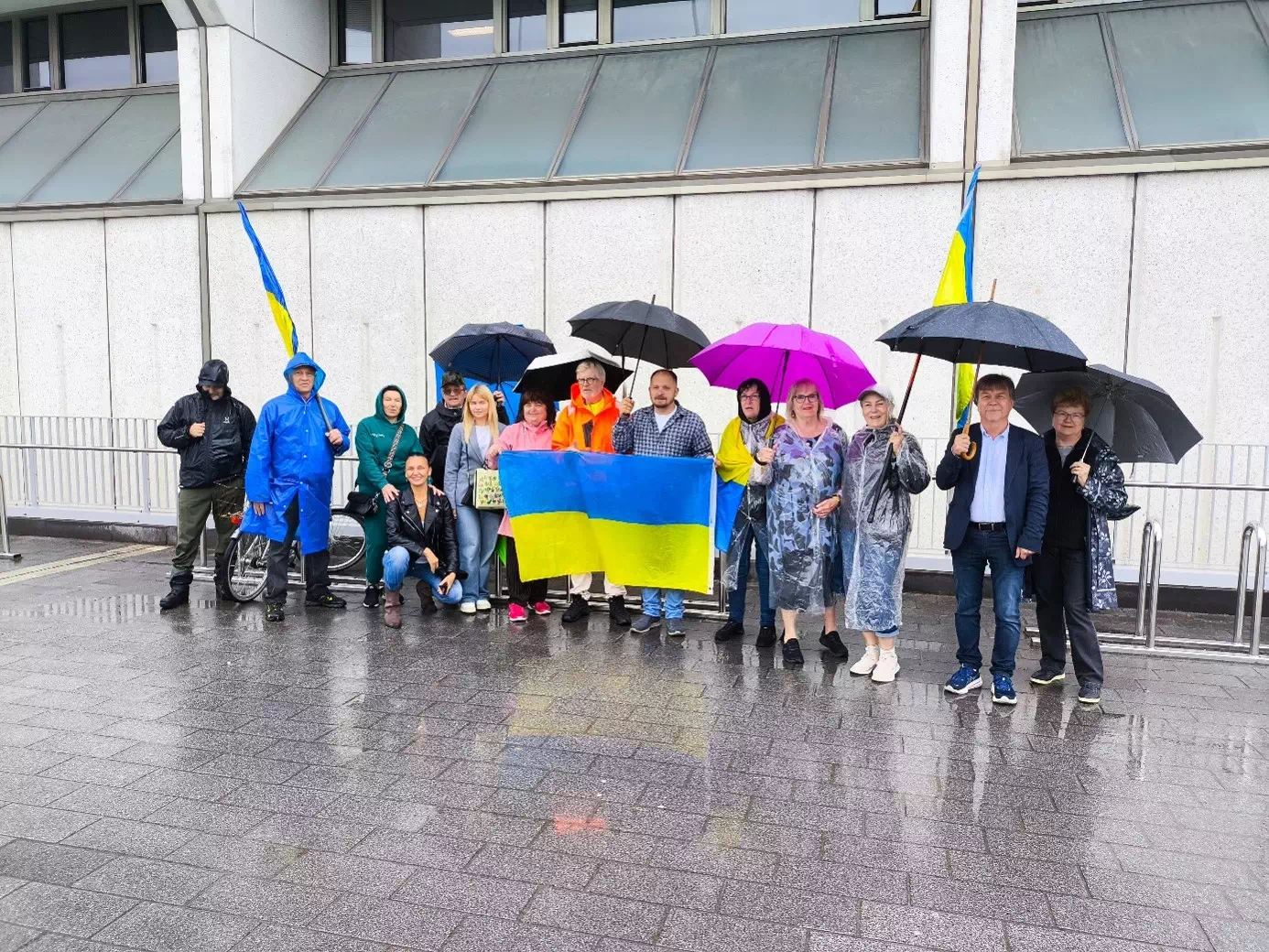
Meeting with Ukrainians from Lappeenranta
Sharing lessons with the global planning community
The Konotop–Lappeenranta partnership also reached a wider audience during this same period. At the World Planning Schools Congress (WPSC) 2026, hosted by Aalto University, University of Helsinki, and Tampere University, the twinning partnership was featured in a dedicated roundtable exploring Ukraine's post-war urban reconstruction alongside the EU's climate neutrality ambitions. The session brought together planning academics, practitioners, and city representatives around a central message: Ukrainian cities are not simply recipients of international knowledge, they are generators of it. Rapid adaptation under crisis, resource prioritisation under constraint, and maintaining long-term vision amid existential pressure are capabilities that resonate far beyond Ukraine, offering the global planning community a rare win.
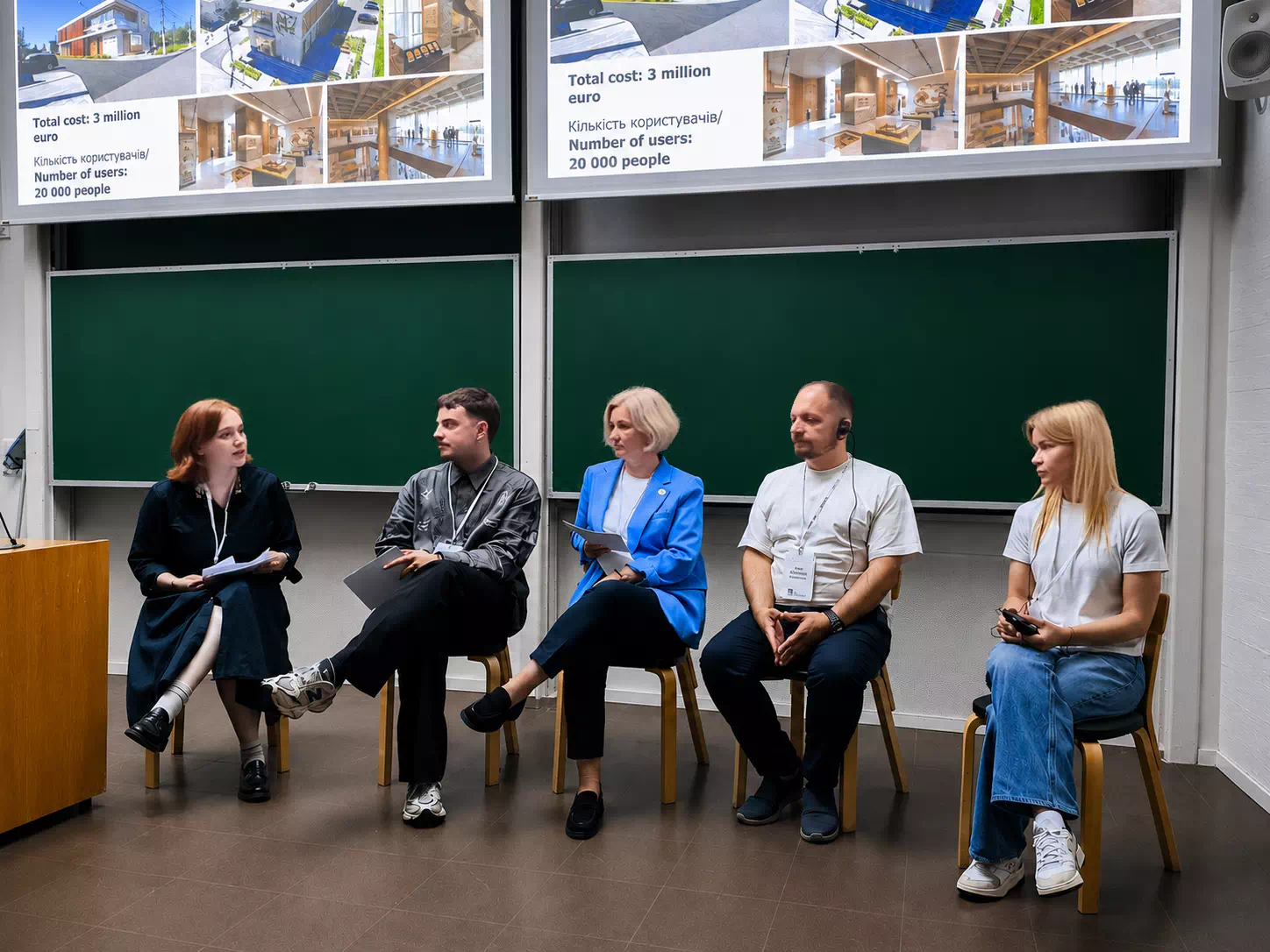
Left to right: Lilybell Evergreen, Pavlo Bilyk, Artem Semenikhin, Svitlana Samsonenko, Tetiana Melnyk
Building resilience together
Together, these two study visits illustrate the versatility of the SUN4Ukraine Partnership Programme: while each exchange responded to the distinct realities of its Ukrainian partner city, from sustainable urban planning in Zviahel to frontline resilience in Konotop, both delivered the same underlying value, equipping municipal leaders with practical knowledge, new partnerships, and renewed momentum to strengthen their communities.