
Water, waste, heating, energy efficiency and air quality may seem like separate challenges, but they are closely connected when cities are planning more sustainable and resilient urban systems.
From 10 to 14 August 2026, representatives of the Ukrainian Flagship Municipality of Kalush visited Rzeszów in Poland as part of the SUN4Ukraine Partnership Programme. Over five days, the delegation visited municipal facilities, met with technical experts and exchanged experiences on solutions that could inform Kalush's own urban development.
The visit combined technical site tours, expert presentations and informal discussions, creating opportunities for both cities to share experience and explore practical approaches to common urban challenges.
Learning across the urban infrastructure cycle
The visit covered a broad range of municipal services, but a common thread ran through the discussions: how cities can make better use of resources while improving the reliability and sustainability of essential infrastructure.
Securing the water cycle
At Rzeszów's water treatment plant, the Kalush delegation explored the city's approach to drinking water production and distribution.
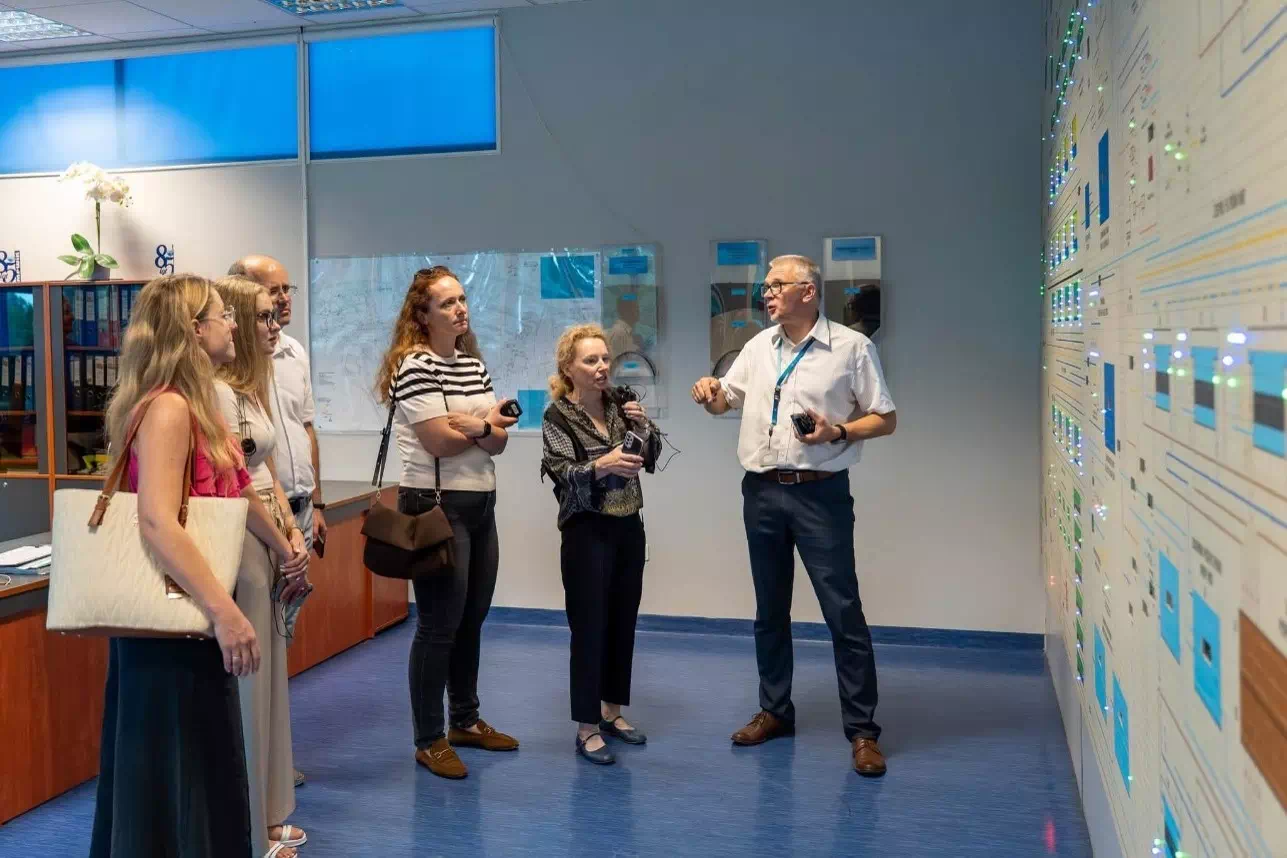
Visit of the water treatment plant
The plant draws its water exclusively from the Wisłok River and supplies Rzeszów through a distribution network of around 1,200 kilometres. The treatment process includes coagulation, ozonation, filtration, activated carbon filtration and disinfection with chlorine dioxide, with UV treatment providing an additional barrier for water quality stabilisation.
Among the solutions presented was a biological early-warning system using bivalve molluscs fitted with sensors. The molluscs continuously filter the water and close their shells when they detect potentially harmful substances, automatically triggering an alarm. The system provides a real-time complement to conventional chemical monitoring.
The plant uses solar power to cover its electricity needs for part of the year.
The visit continued at Rzeszów's wastewater treatment plant, where the delegation examined mechanical and biological treatment, nutrient removal and sludge management.
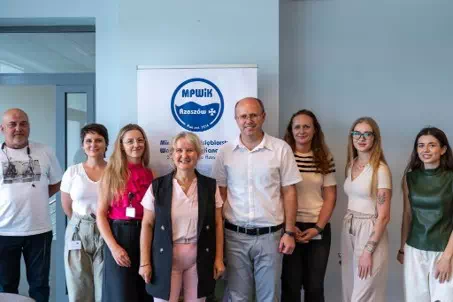
Visit of the wastewater treatment plant, MPWiK
The plant has modernised its sludge treatment processes, including drying, and produces organic soil improver from treated sludge. These measures help reduce the volume of sludge and create opportunities for its further use.
The visit also highlighted how relatively simple operational improvements can improve the plant’s environmental performance. For example, sealing settling tanks and reservoirs has helped significantly reduce odour nuisance in the surrounding area.
Turning waste into energy
Waste management was another major focus of the exchange.
During a presentation, PGE Rzeszów representatives introduced the delegation to the city’s waste-to-energy system and explained how municipal waste can become a source of both electricity and heat. The facility's waste-to-energy unit was commissioned in 2018, with a second technological line added.
Waste is thermally treated to generate steam, which is used to produce electricity, while recovered heat is fed into Rzeszów's district heating network. The facility therefore forms part of a wider urban energy system rather than operating as a standalone waste solution.
The discussions also looked at how the system is managed. Waste providers are responsible for delivering waste to the facility, while financial penalties apply when incoming waste does not meet quality requirements. This creates an incentive for proper sorting before collection.
For Kalush, which is developing its own waste management infrastructure, the visit provided an opportunity to explore not only the technology behind waste-to-energy, but also the economic, regulatory and operational conditions needed to make such a system work.
The delegation also visited Rzeszów's Selective Municipal Waste Collection Point (PSZOK), where different waste streams are collected separately, including paper and cardboard, clothing, tyres, electronics and hazardous substances.
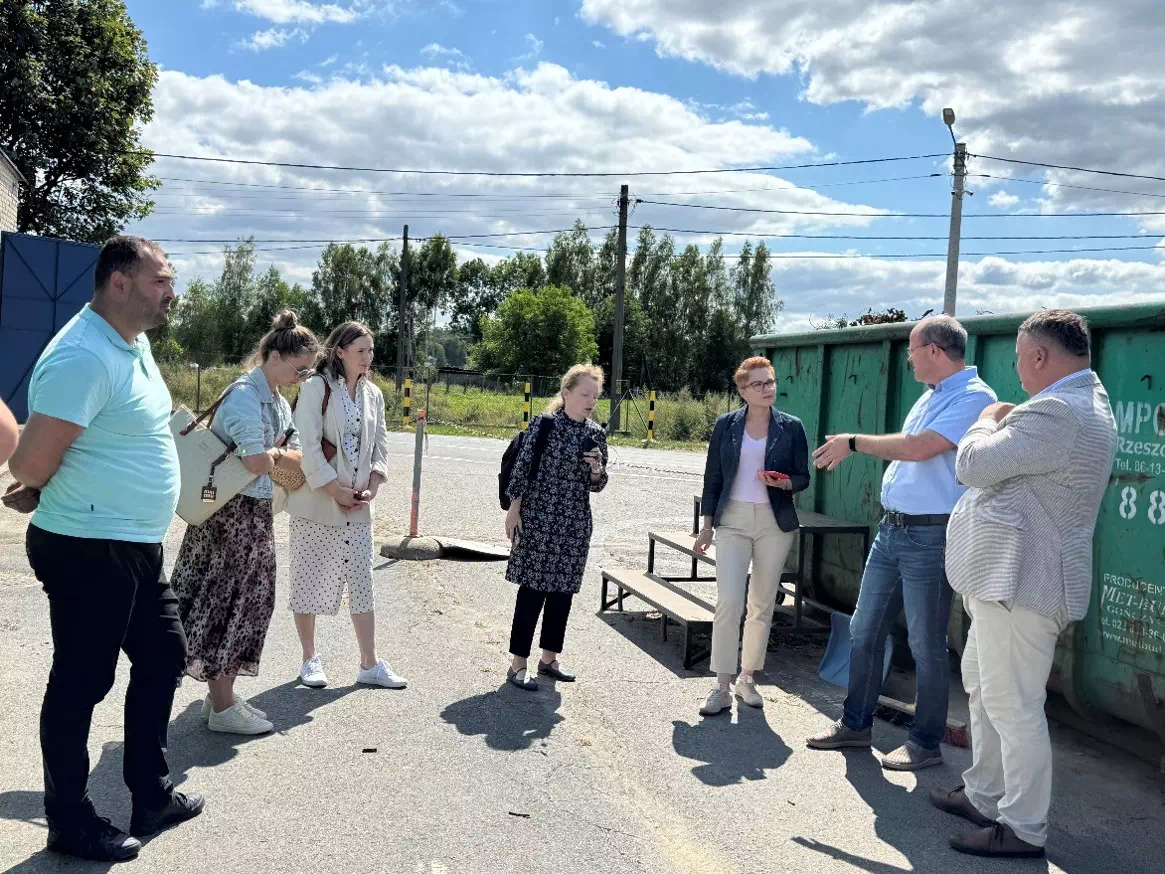
Visit of Rzeszów's Selective Municipal Waste Collection Point (PSZOK), inspecting the waste sorting containers.
One particularly practical example was the city's use of reverse vending machines for plastic bottles. Bottles of up to three litres are returned through automated machines, creating a direct incentive for residents to use the collection system correctly.
The discussions extended beyond infrastructure to the wider framework supporting waste management, including municipal tenders, compliance monitoring and extended producer responsibility. Together, these elements demonstrated how infrastructure, regulation and citizen behaviour can reinforce one another.
Heating systems in transition
District heating was another important theme, particularly given the different heating contexts of the two cities.
At MPEC Rzeszów, the delegation learned about a district heating network extending over 256 kilometres, supplying more than 2,000 buildings and around 5.8 million square metres of heated space.
The network integrates heat from different sources, including cogeneration and recovered heat. The company has invested extensively in modernising and expanding the network, with projects supported through EU funding.
The visit also highlighted the growing role of digital tools in managing heating infrastructure. MPEC uses telemetry, remote meter reading, GIS mapping and thermal imaging to monitor the network and identify heat losses. Mobile backup heat sources are also available for emergency situations.
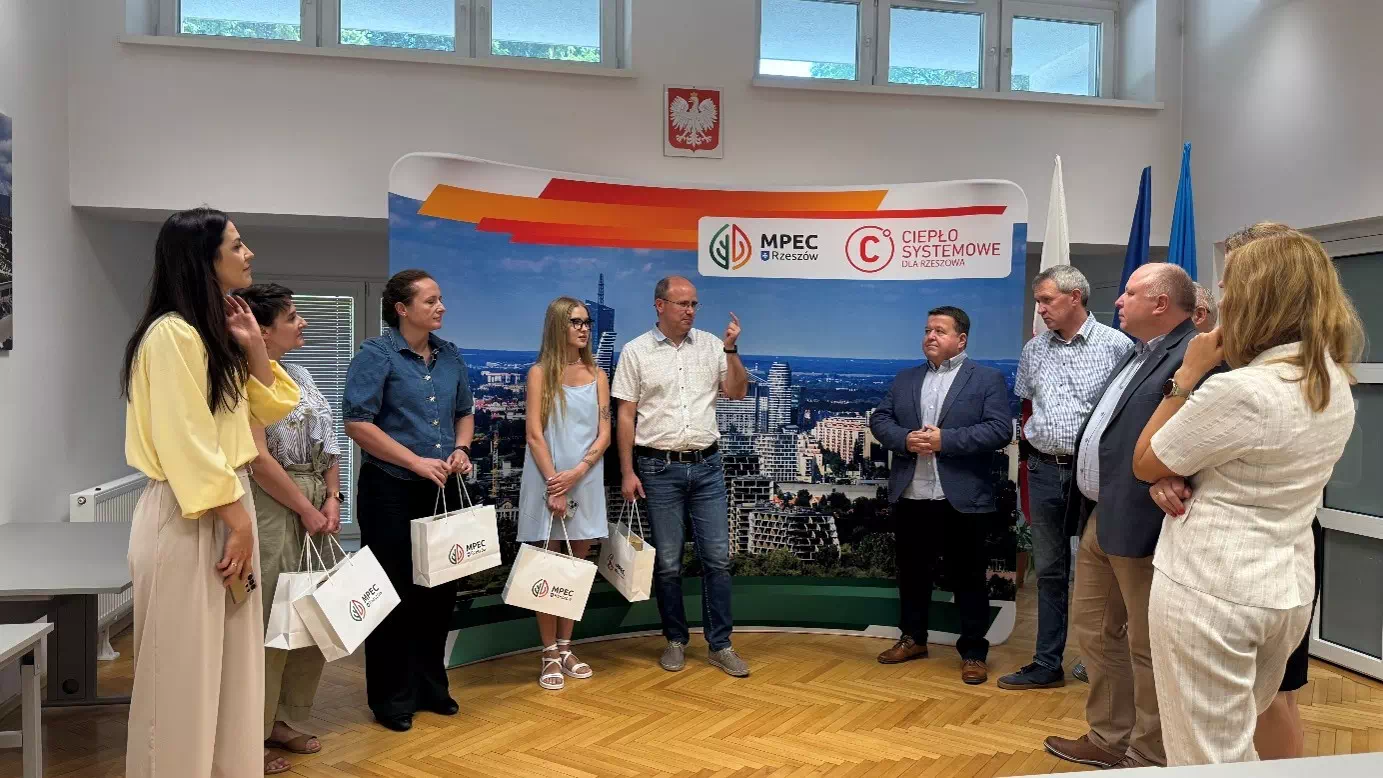
Visit to the MPEC office, informal part of exchanging contacts and discussing each side's experience.
Future plans include expanding the network, lowering operating temperatures and testing hybrid heat nodes combining solar energy and heat pumps for hot water.
These experiences provided a useful basis for discussion with the Kalush delegation, which is facing its own challenges around the future of its heating system, including the shift towards more decentralised solutions.
The two sides also exchanged views on tariff-setting, consumer reactions and the evolution of Poland's district heating sector following EU accession.
Renovating buildings for the energy transition
The exchange also looked beyond energy supply to the demand side.
Rzeszów presented its work under the NEEST pilot project, which focuses on deep energy renovation of urban buildings. The project is being implemented by six Polish cities together with the National Centre for Research and Development.
The Rzeszów team explained how the city selected the district for the project, taking into account its mix of single-family and multi-family buildings, green spaces and public facilities, including a nursery and a school and kindergarten complex. The selection aimed to provide a representative setting in which to explore approaches to deep energy renovation at neighbourhood level.
The project approach goes beyond technical renovation. It combines technical surveys with analytical and social research to understand the characteristics and needs of the district before defining appropriate renovation measures.
For Kalush, this offered an example of how energy efficiency can be approached at neighbourhood level, linking building renovation with wider urban planning and the needs of residents.
Monitoring air quality before pollution happens
The final part of the visit focused on air quality and the relationship between environmental monitoring and urban planning.
Through the LIFE CLEAN-AIR project, running from 2025 to 2029, Rzeszów is working with international partners from Spain, Lithuania and Romania to strengthen its capacity to prevent air pollution rather than simply respond to it.
The project includes the installation of additional air-quality sensors in the city, the development of a local Air Quality Plan with residents and institutions, and the use of forecasting tools to anticipate pollution levels.
The Kalush delegation also visited air-quality monitoring points and urban green spaces, exploring how environmental data can inform local decision-making and contribute to healthier urban environments.
From exchange to future cooperation
Across five days, the study visit brought together very different aspects of urban sustainability, but also showed how closely they are connected.
Water and wastewater management are linked to energy recovery. Waste can become a source of heat for the district heating network. Building renovation can reduce pressure on energy systems. Air-quality monitoring can inform urban planning. And green spaces can contribute to healthier, more climate-resilient neighbourhoods.
For Kalush, the visit provided an opportunity to see these systems operating in practice, understand the technical and organisational choices behind them, and consider which elements could be adapted to its own context.
For Rzeszów, the exchange offered an opportunity to share its experience while gaining a better understanding of the challenges and priorities facing a Ukrainian municipality.
The partnership will continue beyond the study visit. The two cities exchanged contacts and agreed to remain in close communication, with Rzeszów open to providing technical expertise and support to Kalush as needed.
The visit therefore marks not an end point, but another step in the SUN4Ukraine Partnership Programme: creating lasting city-to-city connections through which experience, expertise and practical solutions can continue to move in both directions.